On World Fisheries Day in Accra, a defining moment in Ghana’s fisheries reform has been ignited.
For the first time, coastal communities are helping to define how the territorial seas will be managed, as they collaboratively shape co-management policy.
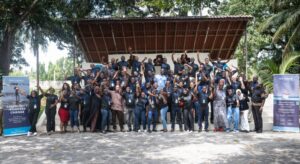
More than 500 fishers, traditional leaders, queen mothers, canoe operators and fishmongers have come together to launch the implementation of the country’s new Fisheries Act, which expands the Republic’s Inshore Exclusion Zone (IEZ) to 12 nautical miles. An initiative of the Hon. Emelia Arthur, Minister of Fisheries and Aquaculture, the event included notable guests in celebration and solidarity, including President H.E John Dramani Mahama, and His Royal Majesty King Tackie Teiko Tsuru II, Ga Mantse.
This gathering shows that small-scale fishers, fishmongers, and traditional leaders’ guardianship has been recognised, marking a clear shift toward community-centred decision-making, and demonstrating Ghana’s leadership in inclusive and sustainable fisheries governance across West Africa.
“We hope going forward that traditional leaders will be part of the co-management structure and play their effective role.” Said John Kenneth Arthur, Secretary General of Canoe and Fishing Gear Owners Association of Ghana. “The right leadership structure will help implement some of the measures that we have all dreamed of for years”.
 Celebration abounded at the conference
A policy for people, not paper
This shift is anchored in Ghana’s recently enacted Fisheries and Aquaculture Act, which expands legal recognition and protection for small-scale fishers. The Act extends the current Exclusion Zone, keeping territorial seas free from industrial fishing vessels, with co-management by coastal communities. The Act also strengthens penalties for illegal fishing, establishes an independent Fisheries Commission, and raises standards for crew safety and labour conditions.
These reforms reflect the outcome of years of advocacy from coastal communities that have seen their catches decline and their influence diminish. Supported by the Transform Bottom Trawling Coalition, small-scale fisher unions like the Canoe and Fishing Gears Owners Association of Ghana have campaigned extensively for the establishment and extension of IEZs across territorial seas, and were instrumental in securing the initial commitment from Ghana’s government, as well as the passing of the bill.
Speaking at the Accra event, Hon. Emelia Arthur declared; “This gathering is not only historic, it is necessary. Because no central reform can succeed without the full participation of the traditional leaders who anchor discipline, cohesion and knowledge in our fishing communities.
 Hon. Emelia Arthur, Minister of Fisheries & Aquaculture, was instrumental in the fishery bill’s passing
Voices of change: from crisis to collective strategy
Across the two-day convening, fisher captains, women processors, traditional leaders, researchers, civil society representatives and government officials spoke openly about resilience, equity, and shared stewardship. Participants emphasised the need for enforcement that collaborates with communities rather than against them, and for monitoring systems co-designed with those who have the greatest knowledge of the ocean.
Blue Ventures helped support the convening, alongside Bloomberg Philanthropies’ Ocean Initiative, ensuring that fisher perspectives guided the discussions, and that implementation planning remained grounded in local realities.
 Artisanal fisher representatives, partners and the Blue Ventures team met with His Royal Majesty King Tackie Teiko Tsuru II, Ga Mantse
“This is a defining moment.” Said Prudence Wanko, Blue Ventures’ Regional Director for West Africa at the event. “Let us remember that policy without practice is incomplete, and practice without partnership is unsustainable. Together, we are making fisheries rights real.”
A shift in direction
Implementation will take time, resources, and political will. However, something significant has changed. A shift in power. For the first time, coastal communities are shaping the rules that govern their seas. This transition from consultation to genuine co-management marks a new social contract between the state and its coastal citizens, one rooted in shared responsibility and lived experience.
Speaking to traditional leaders at the conference, President H.E John Dramani Mahama said: “This conference underscores a fundamental truth, that no reform will succeed without your leadership. Though times have changed with market shifts, reduced institutional support, your authority and legitimacy has remained strong. I pledge that this government will restore respect and formalise your roles.”
 President John Dramani Mahama signed the Fisheries Act into law in August 2025
Why Ghana’s moment matters for West Africa
If fully implemented, Ghana’s Fisheries Act could transform both ocean governance and coastal livelihoods. Success will require sustained investment in community-led monitoring, meaningful inclusion of women and youth, accessible data systems, and sustaining dialogue between government and those on the frontlines of ocean stewardship.
For Blue Ventures, this moment reflects a broader movement across West Africa: where communities lead, resilience grows; where traditional knowledge is valued, stewardship strengthens; and where governments listen, sustainable futures become possible. Ghana’s leadership shows that when communities are empowered, oceans recover and coastal economies thrive.
Images Narh Concepts Studio for Blue Ventures & Stefan Kleinowitz | Blue Ventures