From data tools to governance support, Blue Ventures’ partners across East Africa are aligning their approaches to help coastal communities strengthen fisheries management in practical, locally-grounded ways.
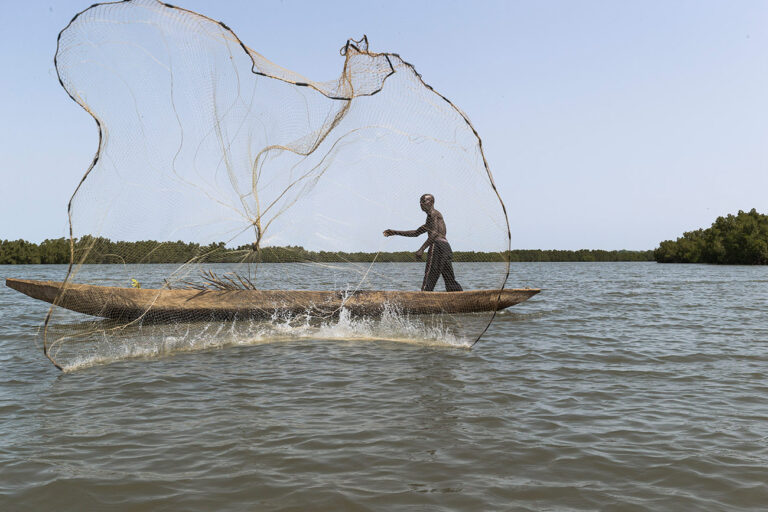
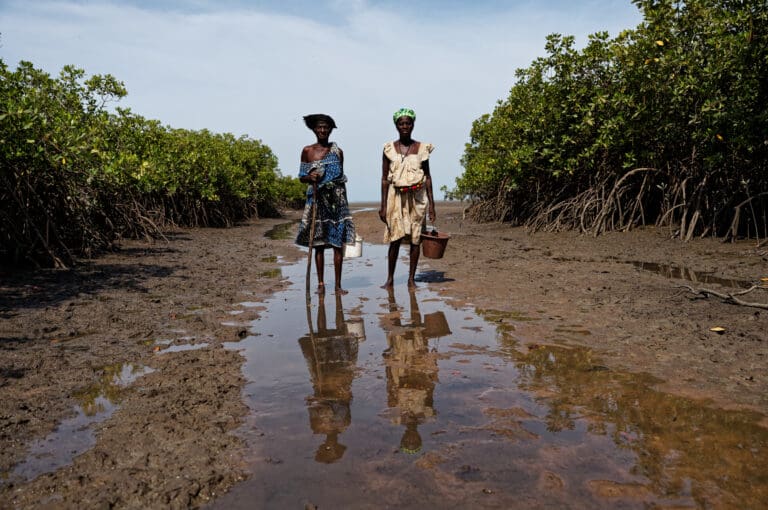
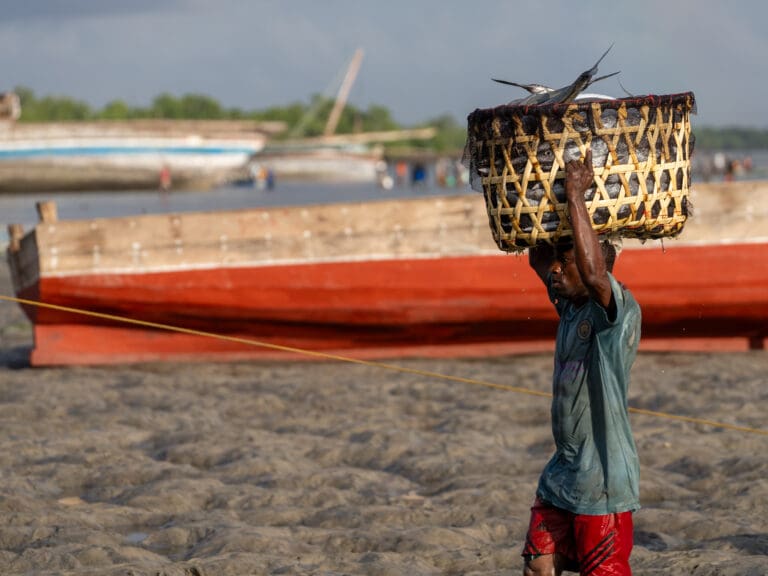
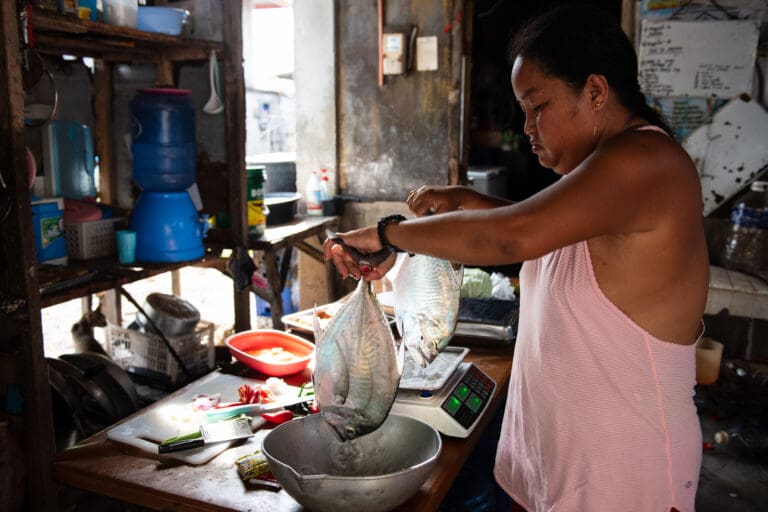
Across the vibrant coastlines of Kenya and Tanzania, millions of people rely on a healthy ocean for their food security, their livelihoods, and their cultural identity. Yet, as overfishing and climate change push these marine ecosystems under growing strain, the communities that know these waters best are often the ones with the least influence over how they are managed.
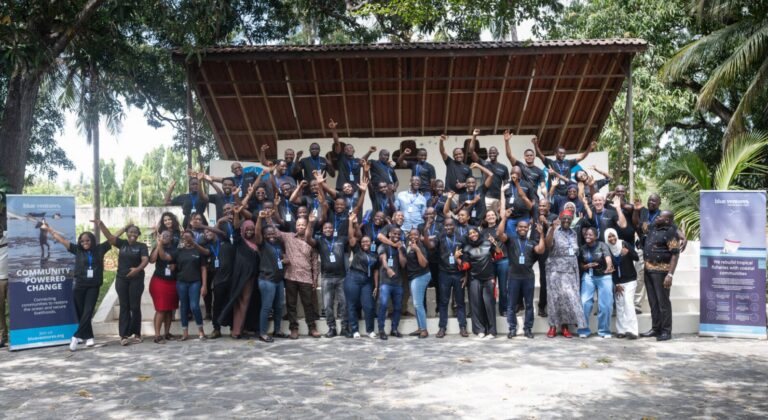
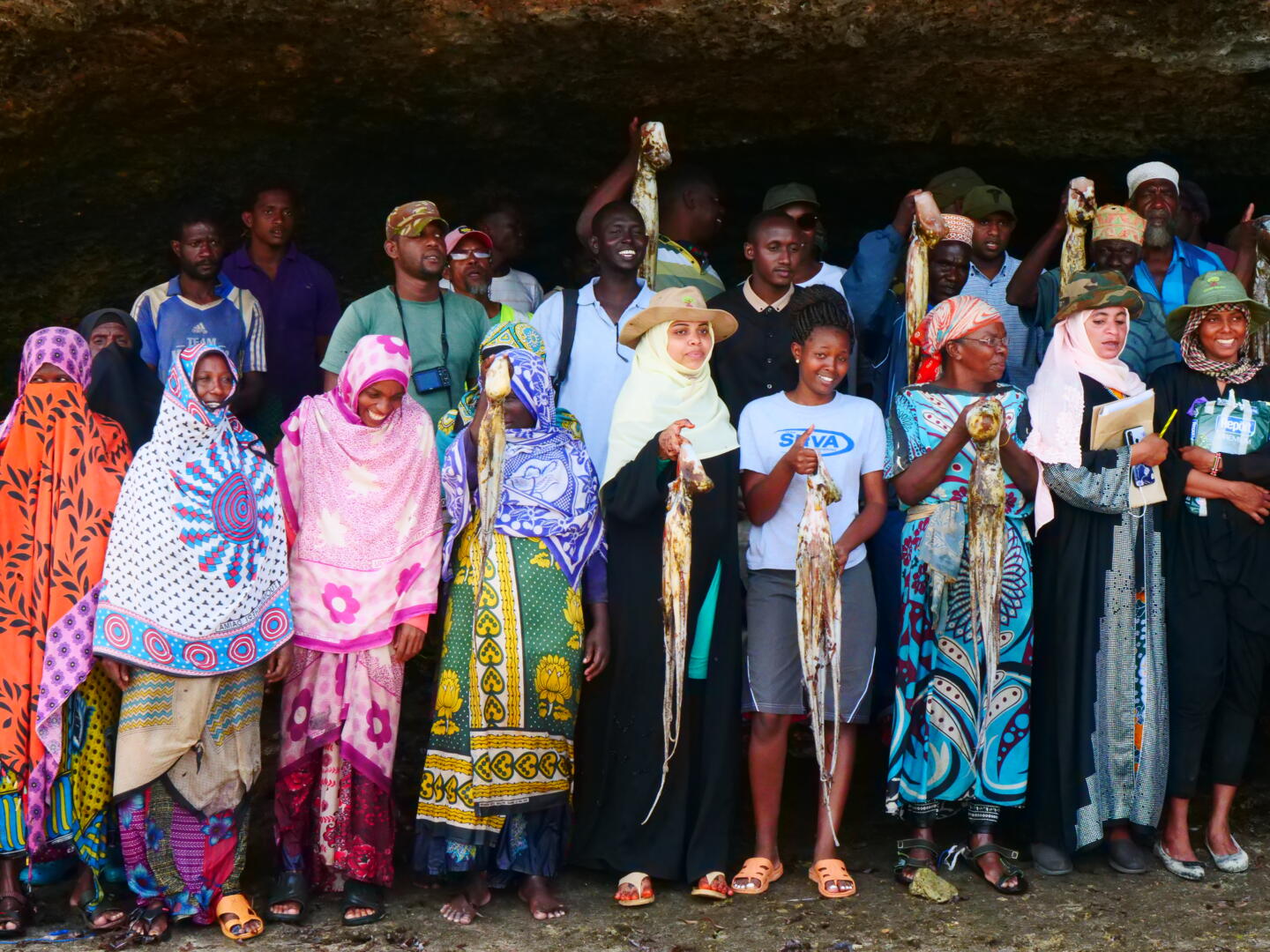
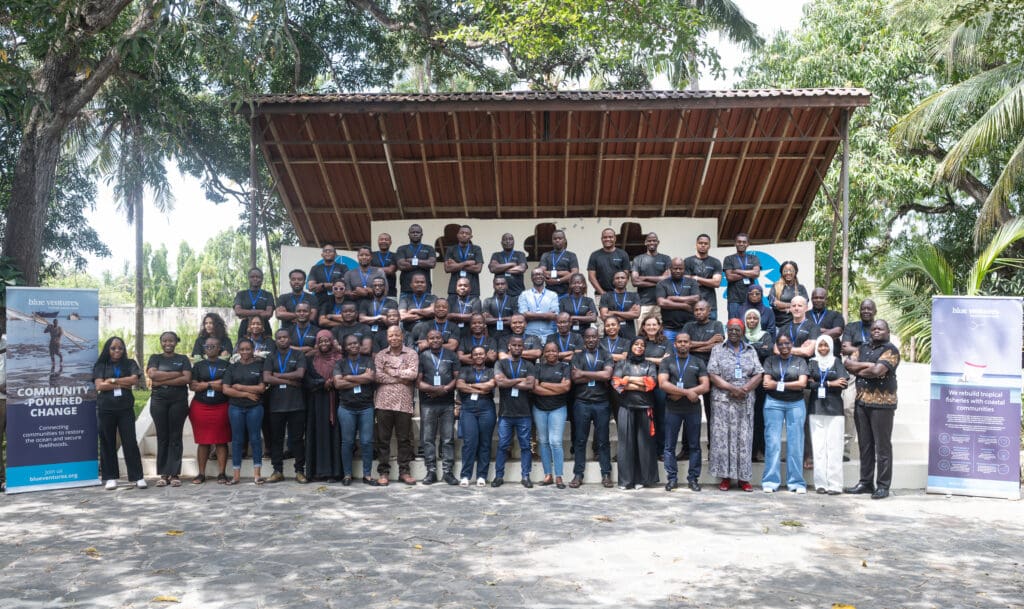
With this reality in mind, Blue Ventures recently convened 17 frontline partner organisations from across East Africa to focus on a shared practical challenge: how to better equip coastal communities to manage their fisheries, strengthen local governance, and build lasting progress for people and ocean.
The gathering formed part of a wider push under Blue Ventures’ Strategy 2030, an ambition to work alongside 400 frontline and civil society partners to reach 10,000 communities, support five million people, and help safeguard 200,000 square kilometres of ocean.
Reaching that scale depends on strong local organisations, shared tools, and trusted partnerships that support communities over the long term.
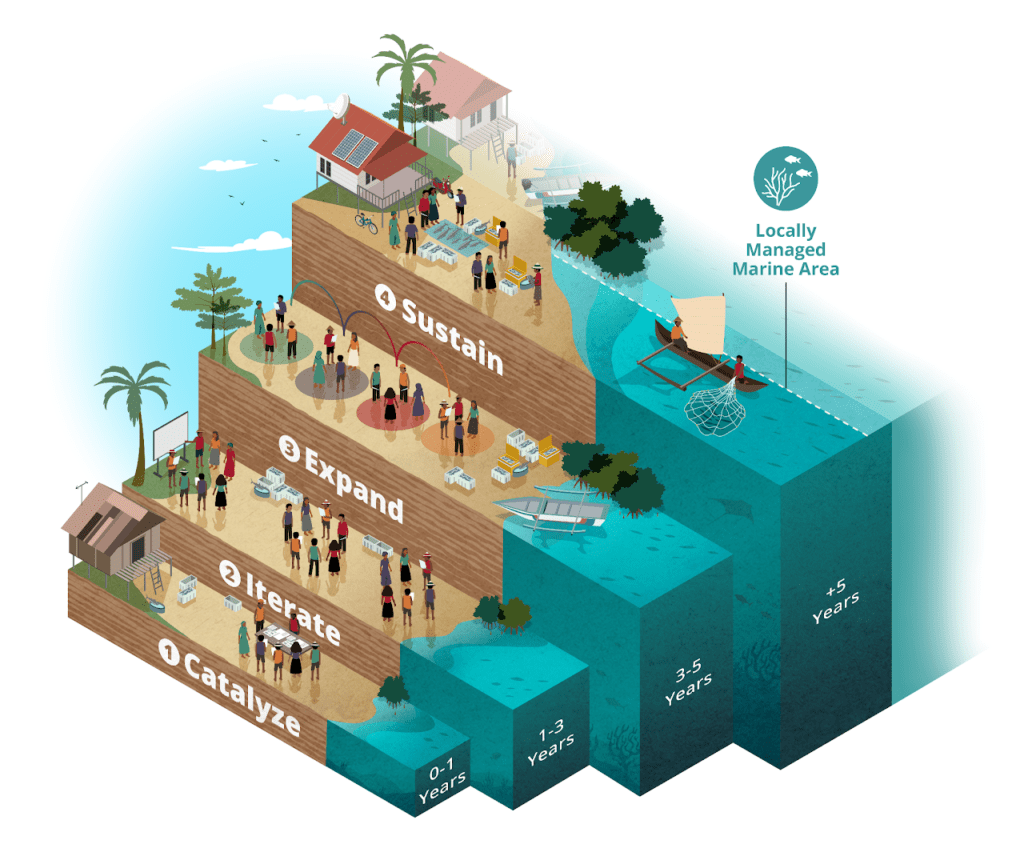
Throughout the week, partner organisations worked through the Blue Ventures Community Pathway Model, a stepwise approach that maps the development of community fisheries management from early awareness and organisation through piloting and learning to expansion, formal governance, and long-term sustainability. Together, participants explored what progress looks like at each stage, what kinds of evidence and systems support it, and how technical support can respond to needs identified on the ground.
Conversations quickly connected frameworks with field experience. Partners shared examples of temporary fishery closures, participatory monitoring, and strengthening Beach Management Unit (BMU) structures, alongside candid reflections on where progress can stall and how to overcome common barriers. Exchanges between partners, especially those at different stages of their journey, created space for practical learning and peer support.
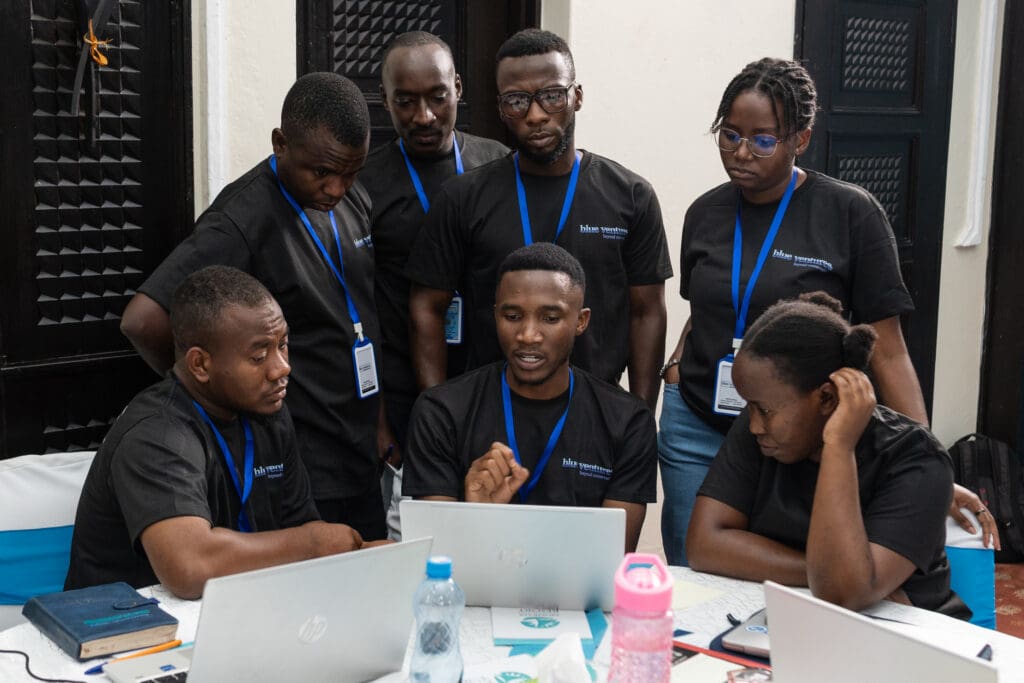
“I’ve learnt a lot from different organisations and Blue Ventures. Especially how we can strengthen BMU governance, which is one of the biggest gaps, by bringing all the parties together,” said Aziz Omar from Chaara Cyclone, a Blue Ventures partner in Kenya.
Collaboration emerged as a strong theme across the discussions. Many participants emphasised that partnership is not only about coordination, but also about reducing duplication, sharing tested approaches, and building momentum across networks. Several partners pointed to collaboration as a practical necessity in their day-to-day work, not just a principle.

“Thanks to partnerships, we can work hand in hand with other NGOs and move forward and further. Without collaboration, it will be repetition over repetition,” said Rahmah Ngaja from one of Blue Ventures’ partners in Tanzania, Under The Wave.
Evidence and learning were also central to the conversations. Sessions explored how community-led fisheries monitoring, ecosystem surveys, and participatory mapping can strengthen local management when information is reliable, understandable, and returned to communities in useful ways. The focus was on practical decision-making, ensuring that the effort communities put into collecting data leads to clearer choices and stronger management actions.
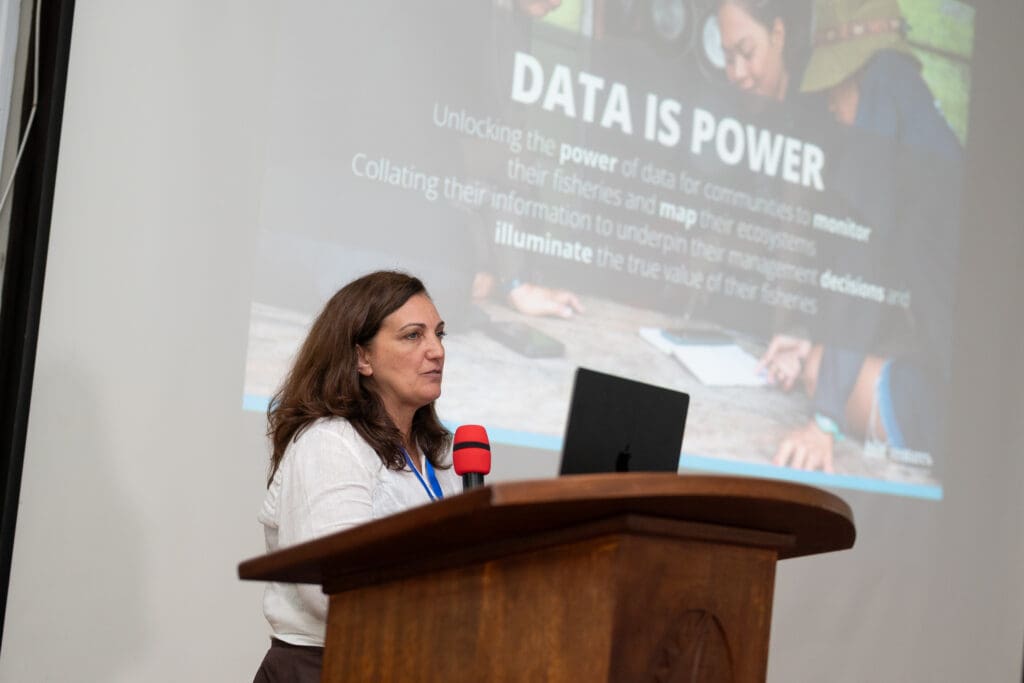
“Data is only useful if communities and partners can apply it in their day-to-day decisions. Our role is to support the systems and skills that help turn information into practical action and stronger management over time,” said Clay Obota, Head of Technical Capacity for East Africa at Blue Ventures.
Reliable evidence also plays an important role beyond the community level. For partners working in complex governance environments, data can strengthen engagement with government authorities and support advocacy for community rights and recognition. Kevin Aringo, a fisheries officer from the Kenya Fisheries Service, joined the discussions and highlighted the value of working together to reinforce community fisheries governance.
Alongside technical approaches, the gathering created space to reflect on how partnerships grow and adapt over time.

Reflecting on the peer-to-peer learning sessions, Teresa Gulatoon from LaMCoT in Kenya, noted how seeing progress elsewhere can motivate new efforts: “Coastal communities can thrive with the right support. We’ve seen what the Kilwa BMU Network has achieved, and it encourages us as we build a new BMU network in Lamu.”
These exchanges reflect a broader shift in how Blue Ventures works, connecting community leadership, local organisations, and public institutions so that effective approaches can travel further. Across East Africa, partners and communities are already demonstrating practical solutions for fisheries management and marine stewardship. Strengthening the networks around them helps those solutions spread and endure.