Research finds women lose income and food access as industrial trawling displaces local fisheries, nutritious fish is diverted from coastal diets to export and feed markets, and strong enforcement of trawling bans restores fish stocks and local food security.
Industrial bottom trawling accounts for over a quarter (26%) of total global marine fish catches, yet a new international study finds it is frequently undermining local food security, nutrition and livelihoods, particularly in coastal communities that depend most on the ocean.
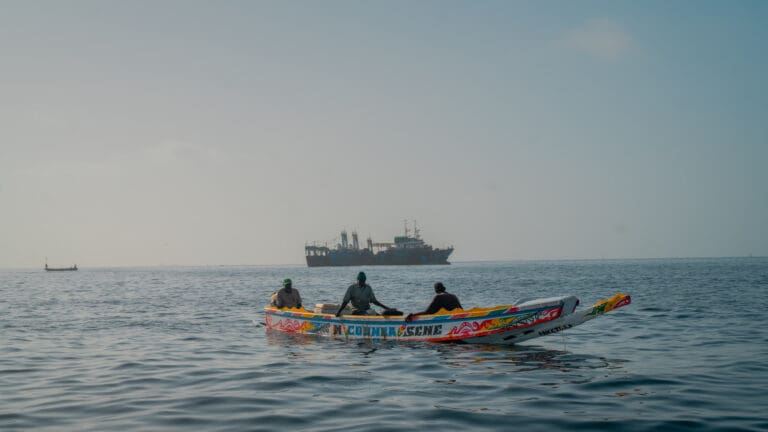
The research, The impact of bottom trawling on food security, analyses nine case studies across Africa, Asia, Europe, Oceania and the Americas, revealing a consistent pattern of what researchers describe as “negative competition”, where industrial trawlers displace small-scale fisheries, degrade habitats, and divert nutrient-rich fish away from local food systems.

Led by fisheries researcher Dr Anna Schuhbauer, Scientific Consulting, and Professor Ussif Rashid Sumaila, fisheries economist at Fisheries Economic Research Unit, University of British Columbia and conducted in partnership with the Transform Bottom Trawling (TBT) Coalition and Blue Ventures, the study challenges the widely promoted narrative that bottom trawling is essential to feeding a growing global population.
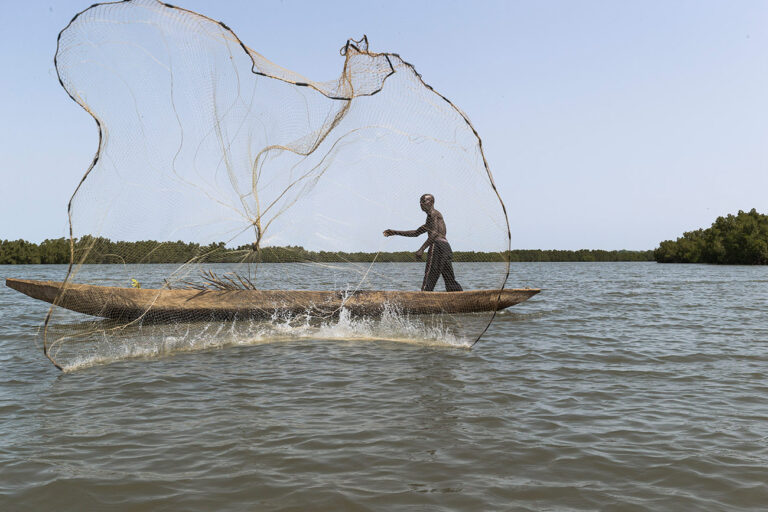
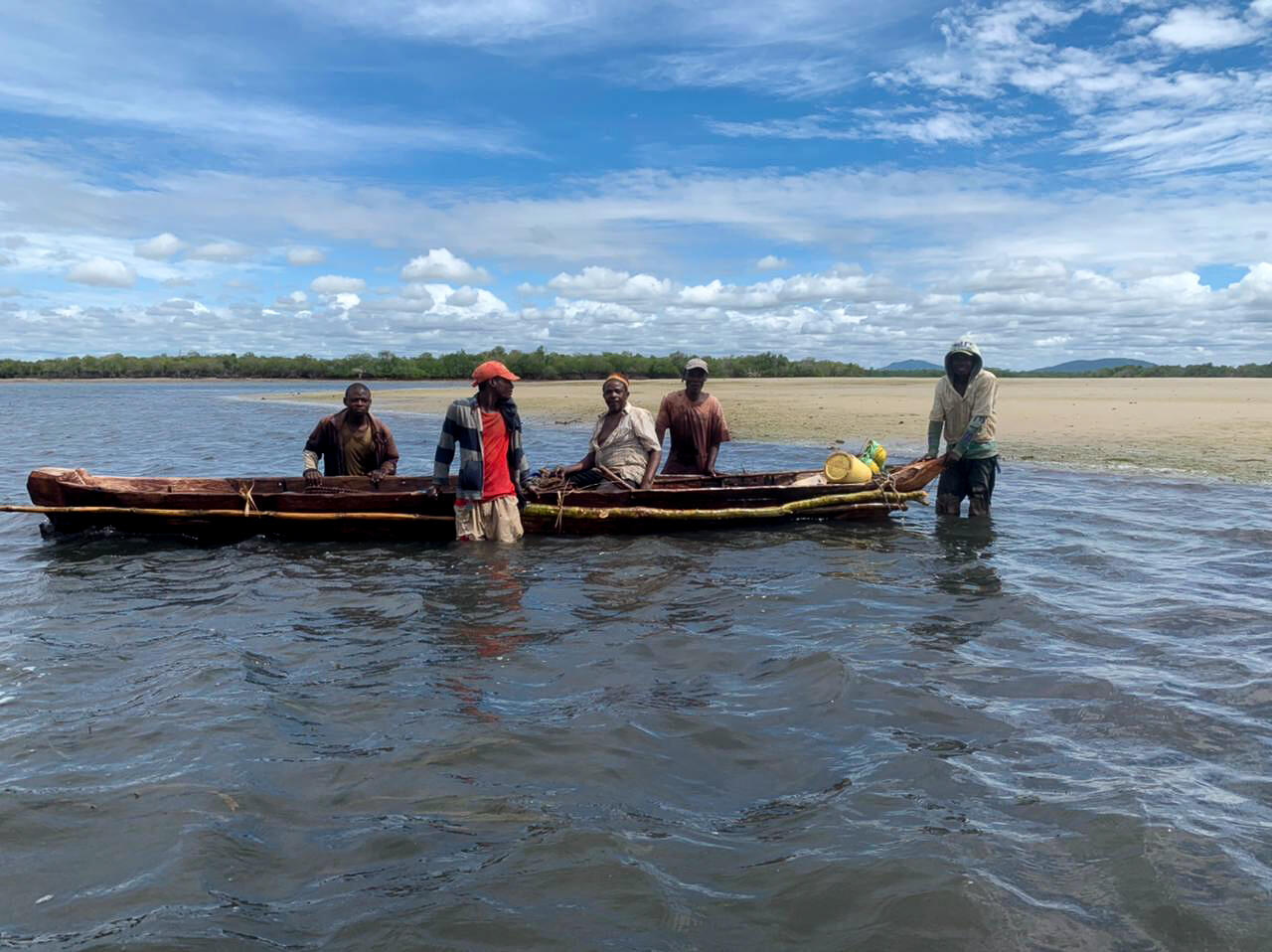
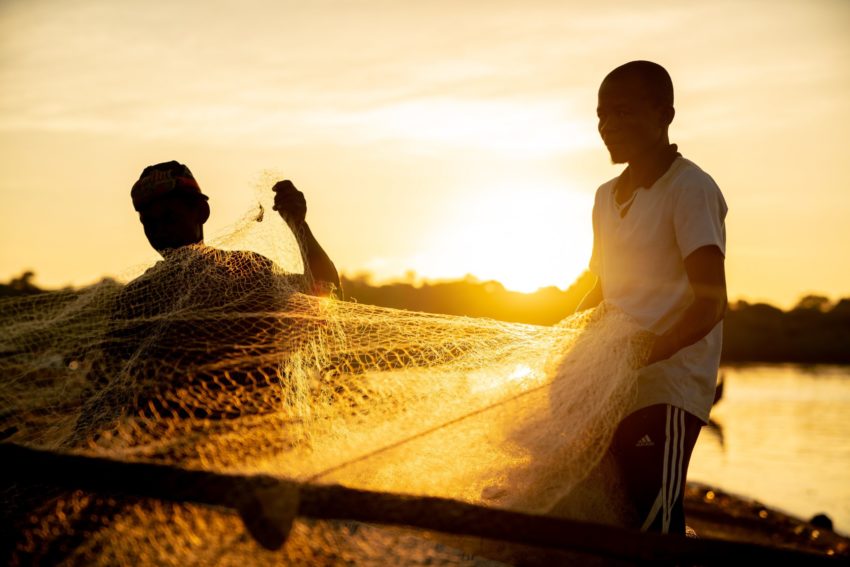
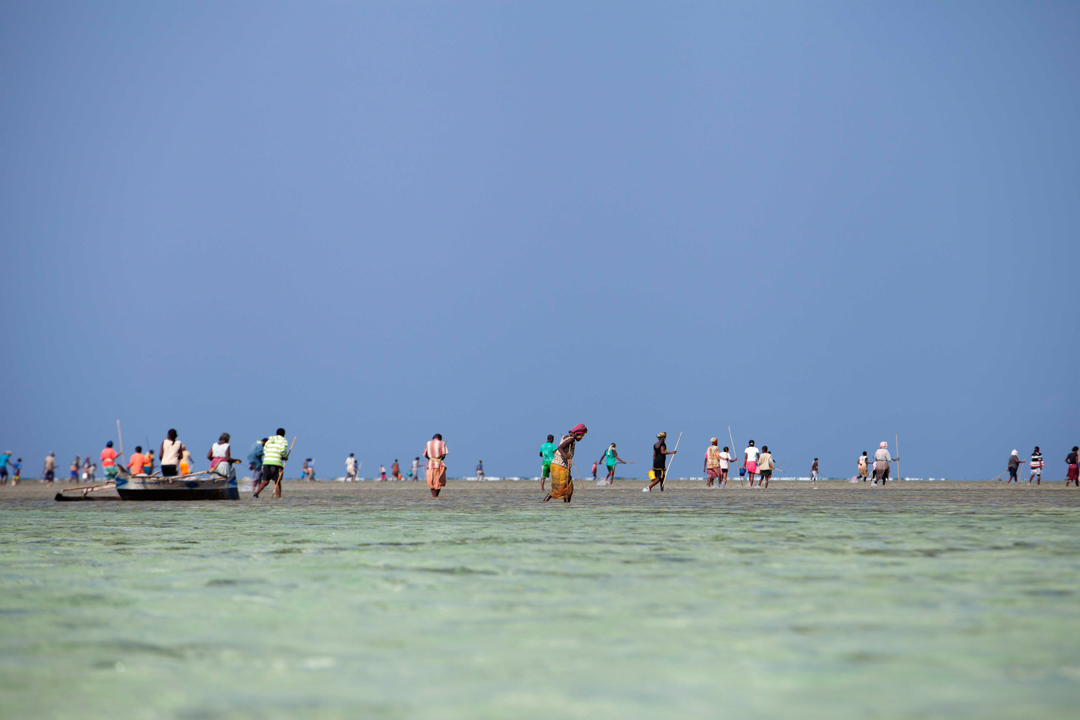
Over 99% of bottom trawling occurs within national waters, often in shallow coastal areas that are also critical fishing grounds for small-scale fishers, who account for more than 90% of the world’s marine fishing workforce. Despite its scale, the research shows bottom trawling frequently reduces the availability, affordability and accessibility of fish for local populations, even as overall landings remain high.
Professor Sumaila said: “The key question is not how much fish is caught globally, but who actually benefits from it. Bottom trawling may deliver high headline catch figures, but it often does so at the expense of access to affordable, nutritious fish for coastal communities, particularly in regions where fish is a dietary cornerstone. This research provides clear evidence that how we fish matters as much as how much we fish, and aligning fisheries governance with food security and social equity is essential if we are to meet global development and sustainability goals.”
Dr Anna Schuhbauer, fisheries researcher, added: “Our research shows a consistent pattern of negative competition across our nine case-studies, where industrial trawling comes into direct conflict with local food systems. In Goa that has meant declining access to affordable seafood that families have long been dependent on. Meanwhile, salmon remains central to the Yukon‑Kuskokwim Delta’s Indigenous communities in Alaska, yet industrial trawl fisheries continue to damage marine habitat and contribute to salmon decline through by-catch. Rio Grande do Sul in Brazil shows this is not inevitable: where a trawl ban is enforced, local access to affordable fish can recover.”

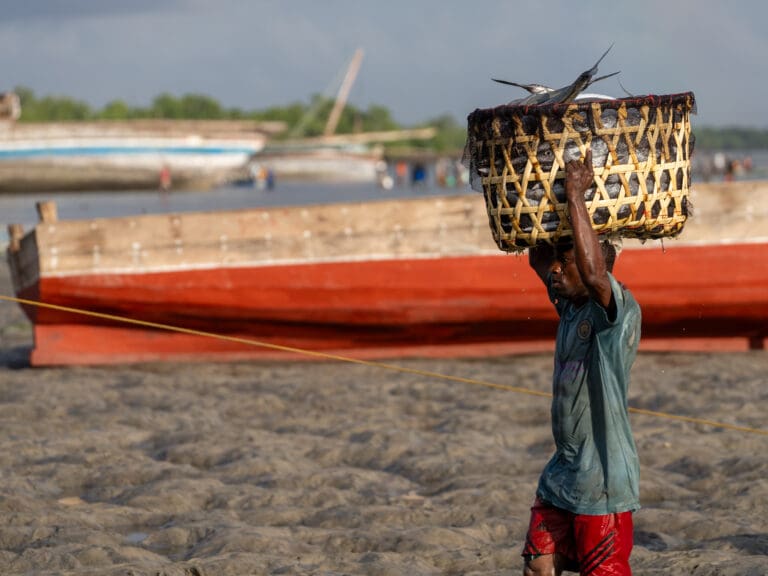
Nutrition diverted from local diets to global markets
Fish are a critical source of bioavailable micronutrients, including iron, zinc, calcium, vitamin B12 and omega-3 fatty acids, particularly for low-income coastal populations. The study identifies multiple pathways through which bottom trawling undermines nutrition security, including:
- Diversion of fish to export markets serving higher-income consumers;
- Increased use of bycatch and small pelagic species for fishmeal and aquaculture feed;
- Declining quality of fish available in domestic markets;
- Erosion of informal food-sharing systems relied on by elders and low-income households.
The research shows that food insecurity can worsen even when total fish production appears stable. By focusing narrowly on volume and export markets, fisheries policies are overlooking a central reality: food and nutritional security depends on access, equity and nutrition – not simply the amount of fish landed.
Women bear disproportionate impacts
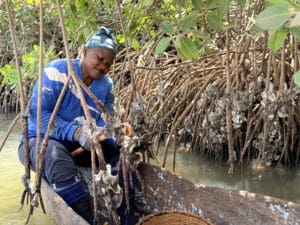
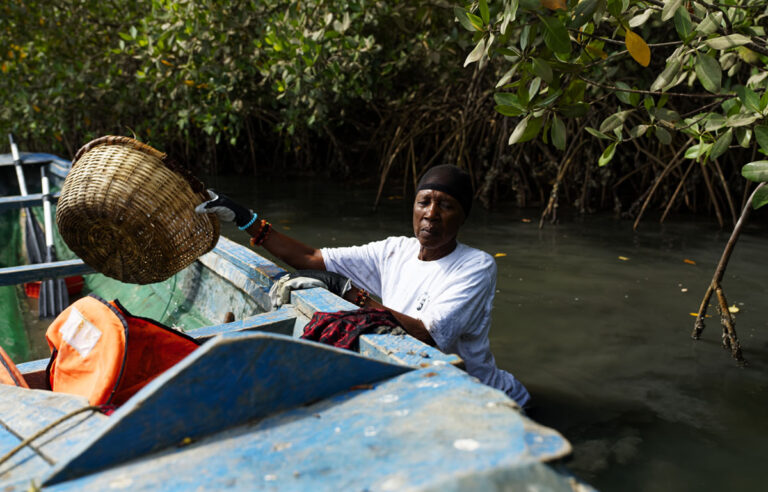
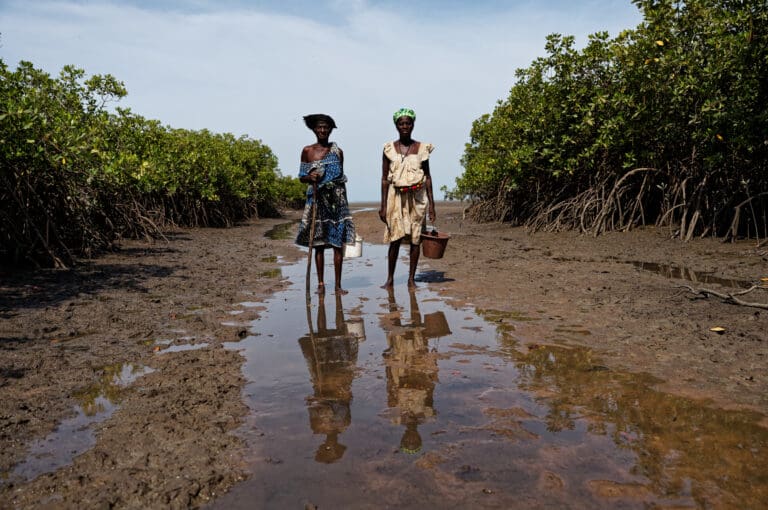
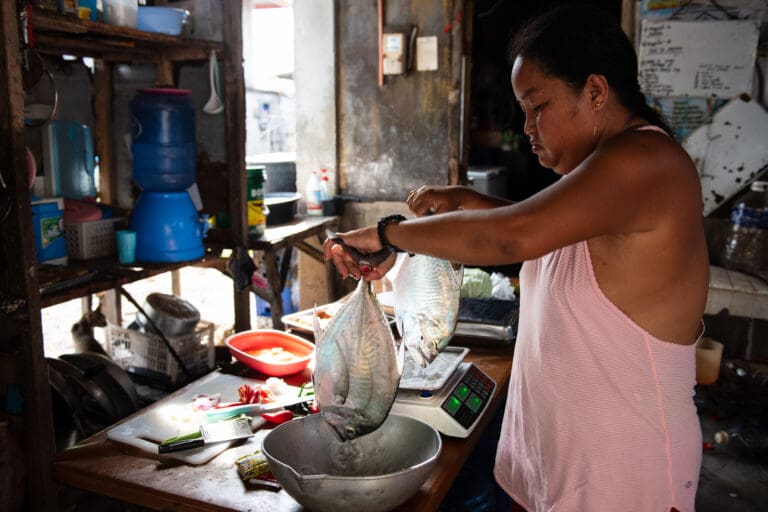
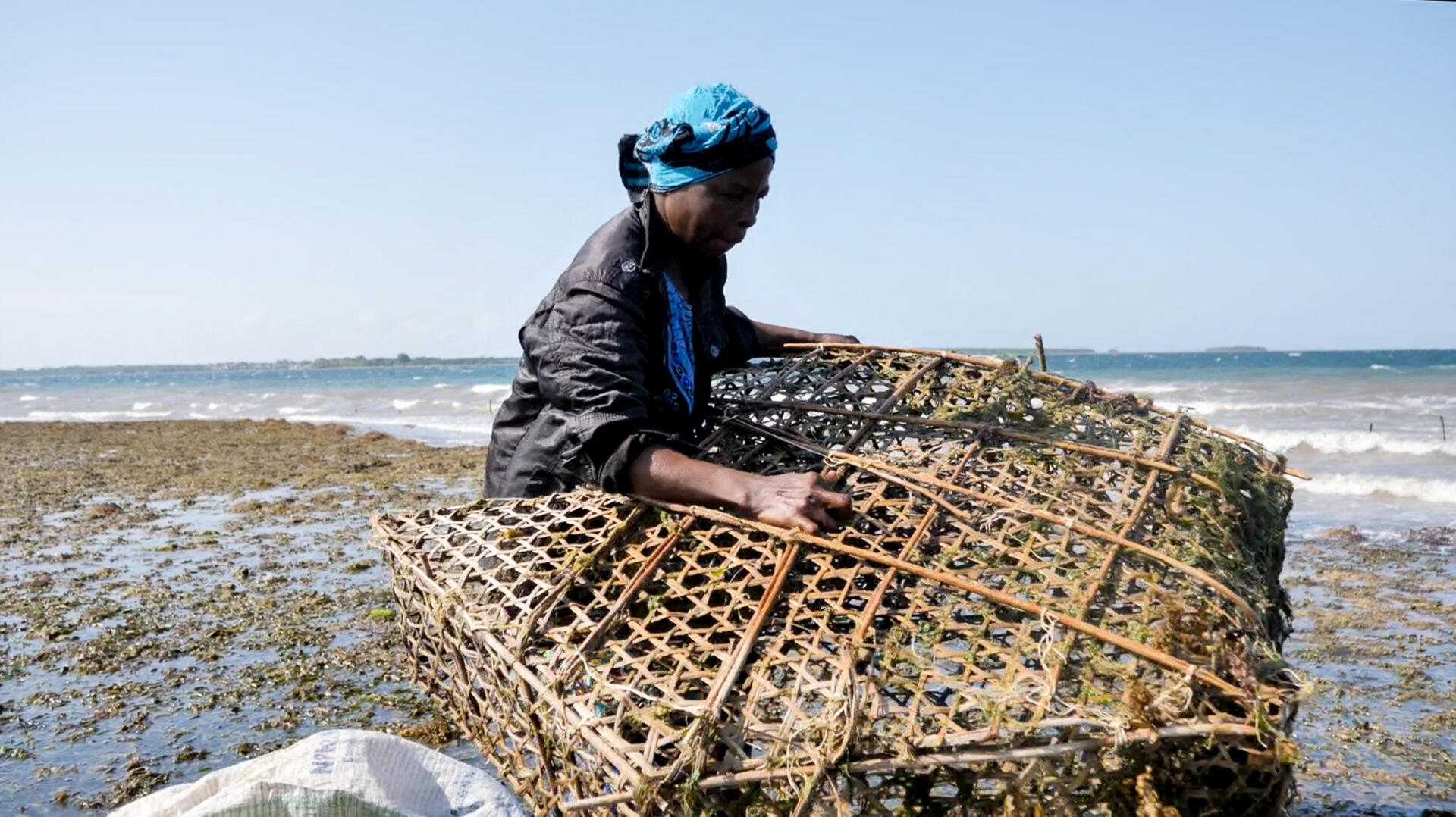
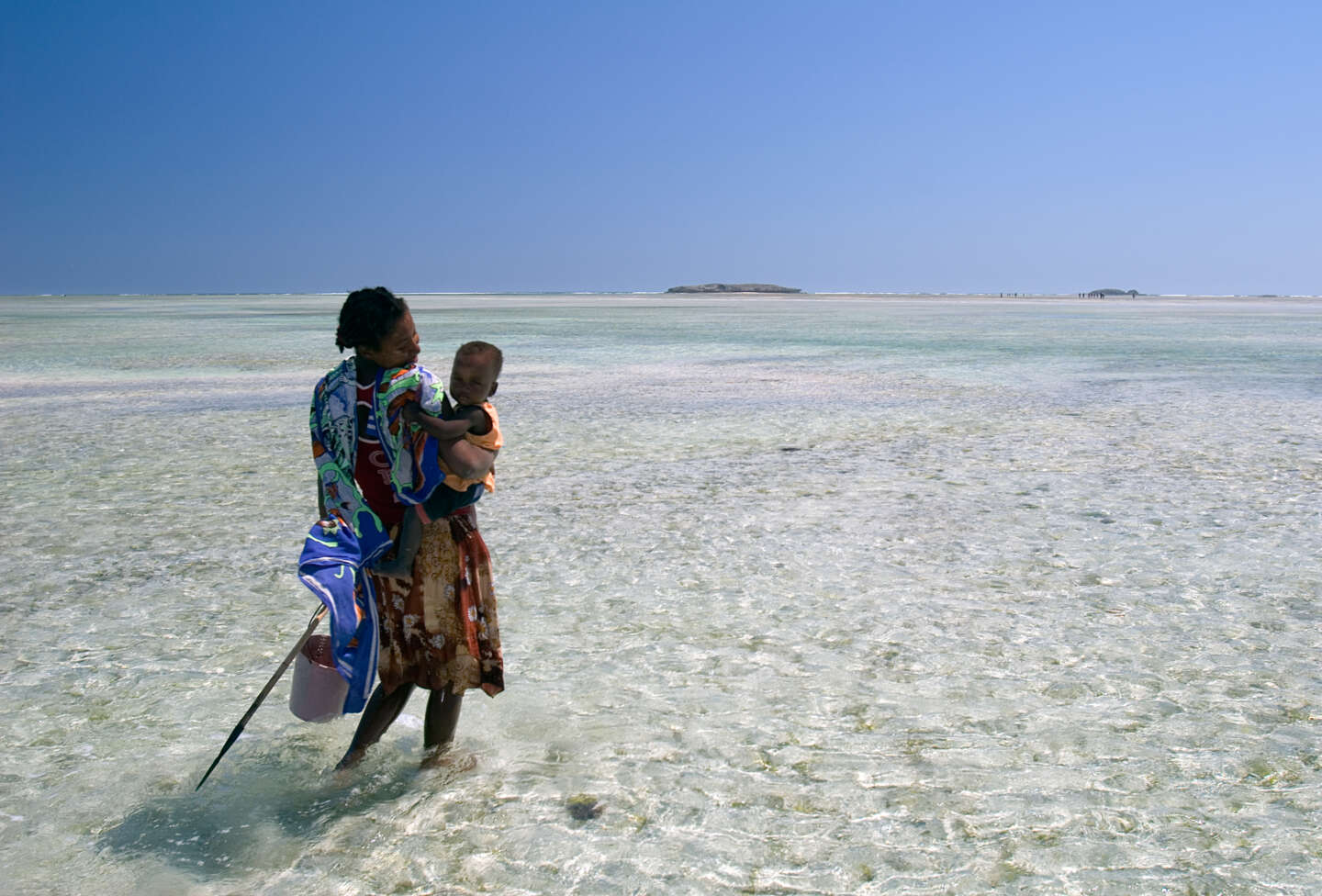
Women account for an estimated 40–50% of fisheries value-chain workers when post-harvest activities are included. In many Global South and Indigenous contexts, women dominate fish processing, drying, trading, and retailing.
The expansion of industrial bottom trawling frequently shifts landings away from local beaches and small ports toward industrial landing sites, export-oriented processing facilities, or transhipment hubs. Women in Ghana, India and Indonesia, who depend on nearshore landings for processing and trade, are losing access to raw fish, experiencing loss of income and financial precarity, and facing reduced household food security.
The research also highlights the need for gender‑sensitive fisheries policies and budgets. Women’s roles in fish processing, trading and informal distribution are central to local food security, yet remain structurally undervalued in decision‑making and funding. Targeted budget allocations and support mechanisms that explicitly recognise and strengthen women’s participation across fisheries value chains could help prevent the loss of income, autonomy and food access associated with industrial expansion.
Enforcement works — when it is applied
One of the report’s clearest findings comes from southern Brazil, where enforcement of a 12-nautical-mile trawling exclusion zone – rather than narrower 3–5 nm limits – has led to rebounding demersal fish stocks, which means improved access to affordable local protein, and reduced conflict between industrial and small-scale fleets.
Ademilson Zamboni, vice-president of Oceana in Brazil, said: “The coast of Rio Grande do Sul is one of the most productive ecosystems along the Brazilian coast, supporting key stocks for small-scale fisheries. For decades, industrial trawl fleets operated there with little control, contributing to stock declines. With their displacement beyond the 12-nautical-mile limit, there are strong signs of recovery. This shift is already benefiting local artisanal fisheries.”
In contrast, weak enforcement elsewhere allows continued incursions into inshore zones, undermining food security even where protections exist on paper.
A shift in fisheries governance
The study concludes that protecting food security requires moving beyond production-focused fisheries management to policies that prioritise nutritional equity, livelihoods and food sovereignty.
Key recommendations include:
- Centre SSF voices in decision-making processes
- Recognise gendered impacts
- Integrate food security into fisheries policy
- Enforce Inshore Exclusion Zones, expand to 12 nm and ensure compliance
- Freeze the trawling footprint – no expansion into new areas
- Redirect subsidies from capacity-enhancing to SSF support
Sebastiao Rodrigues, General Secretary, National Federation of Small‑Scale Fishworkers, said: “In Goa, bottom trawlers are breaking the law and breaking our food system at the same time. When they enter our inshore waters within five kilometers, they damage our nets, wipe out juvenile fish, and cut off coastal communities from affordable staples like sardines, prawns and mackerel. The fish they catch rarely feed local families and are instead exported or turned into fishmeal. We need real enforcement so fish, food and livelihoods can recover.”
Read the research report in full, and find our more about the impacts of bottom trawling at transformbottomtrawling.org